English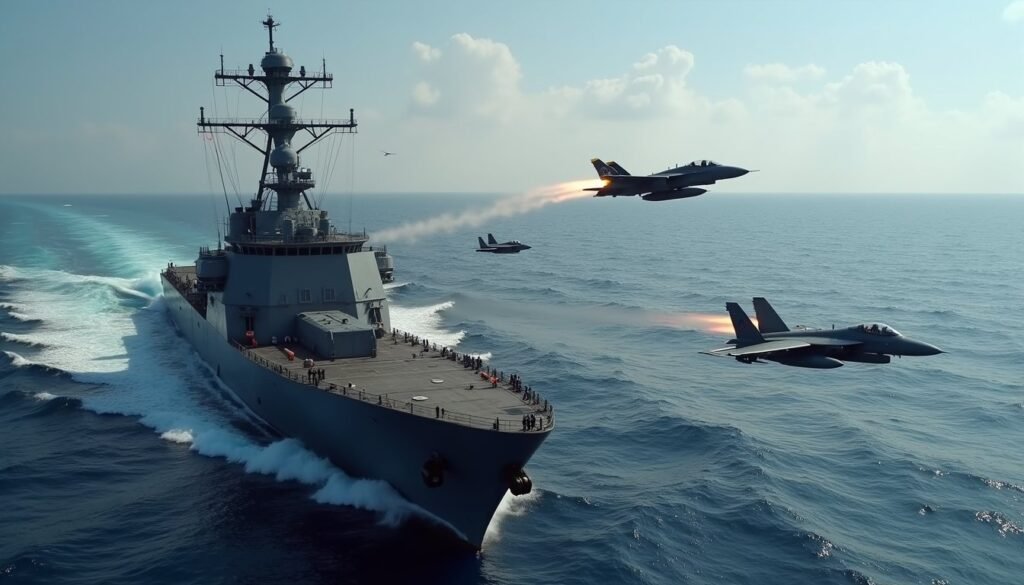































































U.S. Military Strikes on Venezuelan Drug Boats: 2025 Facts and Timeline

In 2025, tensions in the Americas escalated when the U.S. military targeted boats suspected of drug trafficking from Venezuela. These actions drew global scrutiny and sparked debates on legality and intent. This post gathers verified media reports, official statements, and eyewitness video descriptions to explain the U.S. military strikes on alleged drug boats that departed from Venezuela.
The scope covers events from September through November 10, 2025. Confirmed facts include 19 strikes on 20 vessels. At least 75 people died, with one more presumed dead. The first strike happened on September 1, according to Venezuelan sources, and President Donald Trump announced it on September 2 with a video release. Operations occurred in the Caribbean Sea and the Eastern Pacific.
Readers will find a clear timeline of events. The post details what videos and eyewitness accounts reveal. It covers leaders’ claims, unproven elements, the legal debate, and regional responses. This guide relies on public evidence only, with no graphic details. Check sourcing and dates in each section for full context.
Timeline of the 2025 U.S. strikes on alleged drug boats from Venezuela
The sequence of U.S. military actions against suspected drug vessels from Venezuela unfolded quickly in late 2025. Officials and media reports pin down key moments from the first reported strike in early September to a total of 19 operations by November 10. These events took place mainly in the Caribbean Sea, with some extending into the Eastern Pacific. What follows outlines the confirmed dates, locations, and scale based on public statements and verified coverage.
Key dates and places confirmed by media and officials
Media outlets and U.S. officials have outlined a clear progression of strikes starting in September. Venezuelan reports and American announcements align on the basics, though details like exact timing sometimes differ slightly. The operations targeted boats in open waters, far from shorelines.
Here are the main milestones:
- September 1-2, 2025: The initial strike hit a vessel in the Caribbean Sea. Venezuelan officials reported the attack on September 1, while President Trump confirmed it the next day through a public announcement and video post on social media.
- September 15, 2025: Trump revealed a second strike on another boat in international waters of the Caribbean. His statement emphasized the location to underline U.S. claims of lawful action.
- September through October 2025: Additional strikes followed at intervals, with reports confirming eight more in the Caribbean and three in the Eastern Pacific by late October. These built on intelligence about trafficking routes.
- By November 10, 2025: The tally reached 19 strikes across 20 vessels. Most occurred in the Caribbean Sea, which serves as a key path for boats leaving Venezuela’s coast. A smaller number shifted to the Eastern Pacific, near routes connecting to Central America.
For a deeper look at these events, check out this detailed timeline from CNN that compiles official releases. Reports stress international waters to avoid territorial disputes, but exact spots remain undisclosed for security reasons.
Deaths and vessels by the numbers
U.S. strikes resulted in heavy losses among those on board the targeted boats. Compiled data from media and official sources provide firm counts as of November 10, 2025. These figures draw from Pentagon briefings, Trump administration updates, and cross-checked journalism.
Straight facts include:
- At least 75 people killed in total.
- One additional person presumed dead after going missing during an operation.
- 19 distinct strikes carried out.
- 20 vessels hit, with one strike affecting two linked boats.
Numbers may shift as new verifications emerge, but current reports hold steady on these totals. Independent outlets like InSight Crime have tracked patterns to ensure accuracy.
Quick note on strikes: In coverage, a strike counts as one focused military action against a single vessel or closely tied group. This keeps tallies precise and avoids overlap in reporting.
What leaders said on camera and online
U.S. leaders spoke directly about the strikes in videos, posts, and press events. Their words focused on justifying the actions as anti-drug efforts. No opinions color these summaries; they stick to recorded statements.
President Trump addressed the first strike in a September 2 video. He stated that 11 people died and claimed the boat carried members of the Tren de Aragua gang. In later online posts, Trump added that crews found large bags of cocaine and fentanyl on board.
Defense Secretary Pete Hegseth echoed this during a briefing. He said U.S. leaders knew the identities of those on the boats and their ties to criminal groups. Hegseth described the missions as “deadly serious” to stop narcotics flow.
The administration has not released public evidence, such as photos of cargo or documents linking suspects to gangs. For context on these claims, see the New York Times timeline, which reviews statements side by side with available facts.
Ships and forces used in the Caribbean build-up
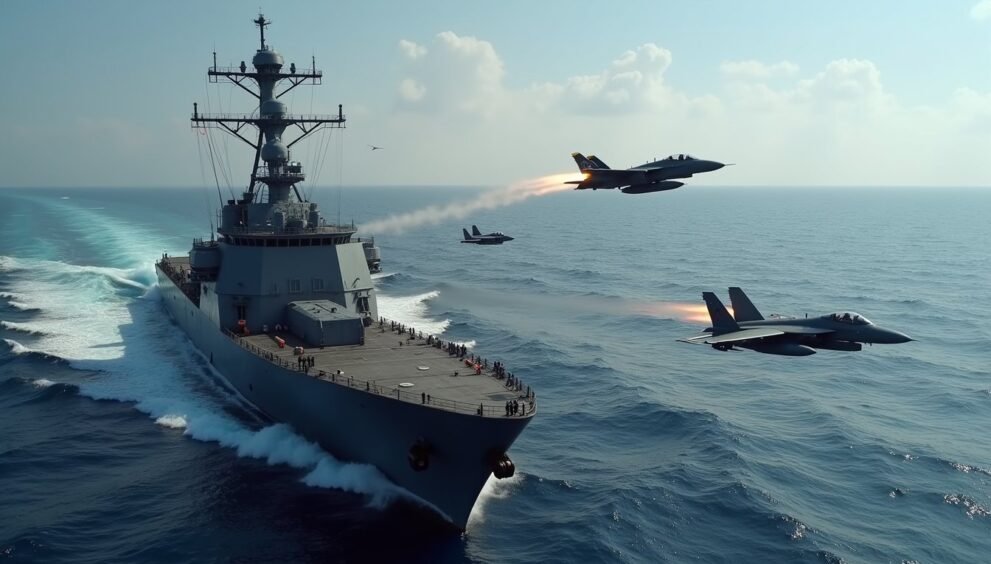
The White House ramped up naval presence in the summer of 2025 to support these operations. This deployment aimed to patrol vast ocean areas where boats slip through. Thousands of service members joined the effort, bringing specialized tools to track and engage targets.
Key assets included:
- Destroyers and cruisers: These large ships provided long-range oversight with advanced sensors to spot vessels from afar.
- Smaller ships: They handled close-in work near potential shore routes, launching helicopters and fast boats for quick response.
- Submarines: Positioned underwater, they added stealth monitoring across wide sea paths.
These forces mattered because they covered huge distances effectively. Sensors detected movements early, helicopters closed in fast, and boats allowed precise hits without risking larger crews. The build-up ensured readiness in the Caribbean’s busy lanes. Details on the strategy appear in PBS coverage of congressional reviews.
What Eyewitness Videos and Accounts Show, and How Reports Were Verified
Public videos and accounts offer glimpses into the 2025 U.S. military strikes on Venezuelan boats. These sources come from official releases and media coverage. They help piece together events but leave gaps in proof. We focus here on what footage captures and how teams checked facts before sharing. This builds a clear picture without speculation.
Official Videos, What You Can See, What You Cannot
The first video, shared by President Trump on September 2, 2025, came from U.S. drone footage. It shows a fast-moving go-fast boat, the type often used in smuggling with a sleek hull and outboard motors. The vessel cuts through calm Caribbean waters at high speed, creating a wide white wake that trails behind. It heads north, away from Venezuela’s coast, under clear daytime skies.
Later clips from Pentagon briefings add more views. These include thermal images of the same boat model in motion. Explosions light up the screen after strikes, with orange fireballs and smoke rising from the deck. No muzzle flashes appear; the attacks seem to use precision missiles from afar. Shadows fall long to the east, pointing to late afternoon timing, around 4 p.m. local.
Yet these videos have clear limits. They capture the action but reveal nothing about cargo inside the boats. No bags or packages show up to suggest drugs. The footage also fails to identify people on board or link them to any group. Video alone cannot confirm motives or affiliations. For a full view of the initial release, watch this PBS News Hour clip from early September.

Photo by Germannavyphotograph
Eyewitness Accounts Near the Strikes
Reputable outlets captured a few accounts from people close to the strike zones. These match video details and official timelines without adding unverified claims. Fishermen and coastal observers reported key sounds and sights.
One account from a Caribbean news team described sharp blasts echoing across the water on September 1. The witness noted clear weather with light winds, fitting the video’s calm seas. The boat appeared dark blue with no clear markings, speeding north before the explosions.
Another verified post from a U.S. outlet covered a September 15 event. Locals heard gunfire-like pops and saw smoke plumes at dusk. They described a similar vessel, white-hulled and fast, with no signs of rescue boats nearby. Reports mentioned no bodies recovered in the water.
A third account, shared by international media, aligned with an October strike in the Eastern Pacific. Observers picked up distant booms around noon under sunny skies. The boat had a gray exterior, and witnesses saw no follow-up searches for survivors. These details line up with drone clips showing fire and wreckage.
Outlets like KSTP gathered these reports on site. Each sticks to basics: sounds, times, and visuals that echo the footage.
How Verification Was Done Before Publishing
Teams took careful steps to confirm reports before they went public. This process ensured only solid details made it into coverage. Start with timestamps from social media posts and match them to local sunrise times and weather data. For the first strike, a 4 p.m. video aligned with clear skies logged by nearby stations.
Next, compare boat features across multiple clips. Hull shapes, colors, and wakes stayed consistent in drone views and eyewitness descriptions. A dark blue go-fast in early footage matched later thermal images from the same operation.
Public vessel trackers helped check positions when data was available. Open-source tools showed boats in international waters, far from shores, syncing with official locations. No close coastal matches appeared.
Finally, cross-check stories from various outlets. If three sources reported blasts at the same time in the Caribbean, that detail held up. Only facts passing all these checks appear here. This method caught fakes, like disputed Venezuelan clips. See the Wikipedia entry for a broad overview of confirmed events.
What Remains Disputed or Unproven
Some questions linger despite checks. Public proof of drug cargo stays absent. No photos or videos show narcotics on the boats.
Ties to groups like Tren de Aragua or ELN lack backing in open evidence. Officials claim links, but nothing public supports them.
Exact spots for several strikes remain fuzzy. Reports give regions like the Caribbean but skip coordinates.
Dates for the first action vary too. Venezuelan sources say September 1; U.S. announcements point to September 2. These gaps highlight the need for more transparency.
Law, rules, and regional response to the U.S. boat strikes
This section explains the U.S. legal framing, the main critiques, and how politics in the region shape the response. It keeps terms simple and sources clear so you can judge the claims for yourself.
Narcoterrorism claims and rules of engagement at sea
U.S. officials said the targeted boats were run by narcoterrorist groups. The claim ties drug trafficking to organized violence, then treats the boats as terrorist-linked threats. Public proof, such as cargo photos or identity documents, has not been released. Independent reviews note that the administration’s statements outpace the evidence made public so far. For a concise rundown of what has and has not been shown, see this review by FactCheck.org.
Interdiction experts highlight a sharp break from normal practice at sea. For about 35 years in the region, U.S. drug operations relied on stop-and-search tactics, often run by the Coast Guard. The standard model is clear: hail the vessel, board with a trained law enforcement team, detain suspects, and seize drugs if found. Lethal force normally arises only in self-defense or when crew are in immediate danger.
The 2025 strikes look different. Reports describe preplanned lethal strikes against moving vessels in international waters. That shifts the use of force from responsive to deliberate, based on prior intelligence and target selection. Analysts at the Council on Foreign Relations called the shift a major escalation compared with long-standing interdiction norms that center on Coast Guard-led boardings, documented seizures, and arrests at sea. Their early brief outlines the change in approach and its risks for maritime law enforcement practice: CFR expert brief.
Strategists and legal commentators also point to the administration’s broader “narcoterrorism” framing, which blends counterterrorism and counternarcotics into a single mission set. A recent analysis summarizes how that framing expands the target set and blurs lines between policing and wartime authorities: Stepwise Risk Outlook.
International law concerns and human rights warnings
Legal experts and human rights groups issued strong warnings after the first wave of strikes. The UN human rights chief, Volker Türk, said the strikes violate the right to life and called for an independent investigation. His office cited the lack of judicial process and the risk of unlawful killings at sea. Read the UN coverage here: UN News report and the detailed press note from the Office of the High Commissioner for Human Rights: OHCHR statement.
Major outlets amplified these concerns. The BBC summarized the UN position that the strikes breach international law and highlighted calls for transparency about targets and evidence: BBC report. PBS also covered the demand for an investigation and accountability: PBS NewsHour brief.
Regional governments issued their own objections. Venezuelan officials described the actions as extrajudicial killings, meaning people were killed without a trial or legal process. Media reporting also captured broader concerns in Latin America about sovereignty and maritime conduct. For a snapshot of reactions and ongoing incidents, see Reuters’ update on later strikes in the Pacific: Reuters coverage.
This post does not reach legal conclusions. It summarizes what experts and officials said, and how they framed the law. The key split is clear: U.S. officials argue military authority applies to narcoterrorist targets at sea, while human rights advocates and several governments say that standard does not fit, and that killings without judicial process break the law.
Regional politics and possible motives
Tensions between Washington and Caracas set the backdrop. The Maduro government has long accused the U.S. of trying to weaken or remove it. U.S. statements, in turn, link Venezuelan actors to drug trafficking, gang networks, and regional instability. Analysts say the 2025 strikes land squarely in that dispute.
Several experts argue the strikes may serve a political goal, not only a drug control goal. They see a pressure campaign designed to isolate Maduro and test his response at sea. A policy brief from CFR marked the strikes as an escalation with diplomatic costs across the region: CFR expert brief. A Politico analysis explored how the campaign fits a wider strategy toward Venezuela, including signaling and coercive pressure: Politico magazine feature. Media reporting also noted that U.S. messaging tied the operations to gangs like Tren de Aragua and to alleged state-linked trafficking, which further sharpens the political edge of the campaign: CNN report.
This is analysis from outside observers, not a claim by this post. It helps explain why the legal fight is also a diplomatic fight, with consequences for alliances, maritime cooperation, and regional security talks.
What to watch next, evidence and oversight
If you want to track the next steps, use this quick checklist. It keeps you focused on evidence, process, and accountability.
- Look for the release of full strike footage, not just edited clips, and the written rules of engagement that applied to these missions.
- Watch for oversight: congressional hearings, court filings, or inspector general reviews that seek records and decision memos.
- Seek public proof of drug cargo, such as photos, chain-of-custody logs, or lab reports tied to specific vessels.
- Track updates to casualty counts, identities, and vessel registration data, noting which items come from officials and which come from independent reporters.
- Compare each new claim to prior official statements and timelines. Consistency matters.
A balanced legal explainer can help you weigh new claims as they appear. This FactCheck.org primer is a good starting point for future updates: Assessing the facts and legal questions.
Stay patient with new releases. Check dates, sources, and whether the evidence is primary or secondhand. Careful reading now prevents confusion later.
How the strikes may affect drug routes and coastal communities
Strikes at sea can change behavior fast, but not always in clear ways. Coastal communities feel those shifts first, from the routes boats choose to the tone of inspections. The points below draw on patterns seen after past crackdowns. They are not confirmed outcomes of the 2025 strikes yet.
Short-term changes smugglers may try
When interdictions tighten, traffickers tend to adapt in simple, high-speed ways. You may see familiar tactics return, often within days.
- Faster go-fast boats and more night runs: Speed and darkness help avoid detection. This pattern appeared in prior crackdowns tracked by U.S. oversight reviews of Caribbean interdiction efforts. See the historical context in the GAO’s review of U.S. interdiction in the Caribbean.
- Route shifts to new corridors: Traffickers test gaps, moving from known lanes toward less patrolled segments, then back again. Past State Department reporting describes how networks mixed routes and cover to avoid patrols, including blending with migrant flows and fishing traffic. Review the regional overview in The Caribbean country chapter.
- Tighter convoys with fewer radio calls: Smugglers often cut radio use, rely on preplanned timings, and move in clusters for mutual support. Short, coded bursts or handset messaging reduce the chance of intercept.
- More staging near busy fishing grounds: Crowds provide cover. Expect more decoys, false distress calls, or quick handoffs near fish aggregation points.
- Swaps to “just-in-time” loads: Crews may carry smaller packages for shorter legs, meet at sea, then split again. This reduces the loss if a boat is hit.
These moves reflect how traffickers reacted to earlier enforcement, not a forecast of what will happen now. Treat them as possibilities to watch.
Risks to fishermen and migrants in busy waters
Lethal strikes raise the temperature for every small craft. Even lawful boats can face new hazards when seas are crowded and tensions are high.
- Misidentification of small boats: A pirogue with dark paint and no markings can look like a go-fast at range. Low profiles, cluttered decks, and high wakes add to confusion.
- Less willingness to stop for checks: Crews who fear force may try to flee, which raises collision and escalation risks. This affects fishers, ferry crews, and migrants alike.
- Fear among lawful boaters: Reports from 2025 capture anxiety along working coasts, including Venezuelan fishers who worry about sudden encounters. See the on-the-ground snapshot in the BBC feature on Venezuelan fishermen’s fear.
If you work at sea, simple habits improve your safety. These tips echo guidance from maritime groups and safety manuals for small-scale fishers.
- Use bright, reliable navigation lights; add reflective tape on rails and masts.
- Carry AIS if feasible, or at least a radar reflector to boost your signature.
- Monitor VHF Channel 16; respond to hail promptly and plainly.
- Keep your course steady when hailed; slow to idle unless told otherwise.
- Stow machetes, gaffs, and spears out of sight during inspections.
- Keep IDs, vessel papers, and safety kit in a dry bag by the helm.
- Wear lifejackets, keep a throw line ready, and log your float plan.
- Check engine, fuel, and bilge before every departure; carry spare plugs and tools.
For a practical reference, see FAO’s guide on small-boat readiness and safety routines for the region: Safety at sea for small-scale fishers in the Caribbean.
Stay informed without falling for rumors
Fast-moving incidents create noise. A simple routine helps you separate firm updates from viral claims.
- Check official releases and independent outlets with clear bylines and timestamps. Prioritize pieces that cite documents, video sources, and named officials.
- Compare two or more reports before you share or save a claim. Look for matching dates, locations, and casualty counts.
- Avoid unverified graphic clips. If metadata is hidden or the uploader is new, move on.
- Use targeted keywords to find consistent coverage: “U.S. boat strikes 2025,” “Caribbean interdiction,” “Venezuela drug boats.”
- Save the date, outlet, and link next to each key detail in your notes. This helps you track updates and corrections later.
Reliable news builds from documented facts, not viral speed. A steady media diet will help you stay current without getting swept up in rumor.
Conclusion
The public record shows a hard line at sea. By November 10, 2025, the U.S. carried out 19 strikes on 20 vessels, resulting in at least 75 deaths, plus 1 presumed dead. Videos and statements confirm lethal force at sea, but no public proof ties these boats to drugs or to named groups. Legal and human rights concerns remain serious, and the demand for evidence is still unmet.
Clear takeaways:
- 19 strikes on 20 vessels by Nov 10, 2025
- At least 75 people died, plus 1 presumed dead
- Videos and statements show lethal force at sea, but public proof of drug cargo and group ties has not been shown
- Legal and human rights concerns remain serious
Send verifiable tips and questions. Ask for full, unedited footage, written rules of engagement, recovered cargo photos, chain-of-custody records, and exact coordinates. Share what you can confirm, and keep the focus on accountability.